When it comes to motivating employees and driving performance, few tools are as powerful as incentive pay. But with so many variations, choosing the right one for your business can feel overwhelming. In this guide, we break down the types of incentive pay, explain how they work, and offer examples to help you choose the most effective model for your goals.
What Is Incentive Pay?
Incentive pay is compensation linked to defined performance, outcomes, or goals. It may take the form of commissions, individual bonuses, team incentives, or company-wide rewards. Some recognition awards are discretionary rather than calculated from a target agreed in advance.
This pay structure is designed to:
-
Boost employee motivation
-
Align individual performance with business goals
-
Reward excellence and productivity
Incentive Pay Definition: A financial reward provided on top of base salary, typically tied to specific performance metrics or outcomes.
What is incentive pay? It’s not just about bonuses - it's a strategic tool to drive behavior, increase engagement, and retain top talent. If you want the full picture of how incentive pay fits into bonuses, commissions and KPIs, start with our Incentive Compensation guide.
Benefits of Incentive-Based Pay
-
Drives performance through clear reward structures
-
Improves goal alignment across departments
-
Links part of compensation spending to defined results
-
Encourages retention by recognizing top performers
Common Types of Incentive Pay (With Examples)
Understanding the various forms of incentive pay will help you determine which is best for different roles in your organization.
1. Individual Performance Bonuses
Individual performance bonuses rewards based on personal KPIs or performance metrics.
Incentive pay examples:
-
A sales rep earns a $2,000 bonus for surpassing their monthly revenue target.
-
A customer success manager receives a quarterly bonus for achieving a 95% retention rate.
Best for: Sales, customer service, and performance-driven roles.
2. Team-Based Incentives
Bonuses or rewards split across a team when shared goals are hit.
Team-Based Incentive Example: A product development team receives a collective bonus when they deliver a feature ahead of schedule and under budget.
Best for: Cross-functional teams, project-based work.
3. Profit Sharing
Employees receive a percentage of company profits, typically distributed annually.
Profit Sharing Example: A company allocates 10% of annual profits to a bonus pool divided among staff based on tenure and salary level.
Best for: Small businesses or startups seeking alignment and loyalty.
4. Commission-Based Pay
Compensation based on a percentage of sales or revenue generated.
Commission-Based Pay Example: A sales rep earns 5% commission on all new deals closed.
Best for: Revenue-generating roles like sales or business development.
5. Spot Awards or Recognition Bonuses
One-time rewards given for exceptional contribution, effort, or initiative.
Spot Award Example: An employee receives a $500 bonus for proposing a workflow automation that saves the team hours of manual work.
Best for: Boosting morale and encouraging innovation.
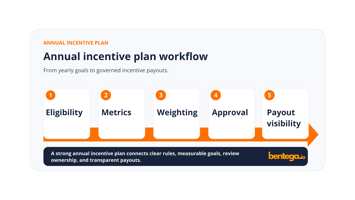
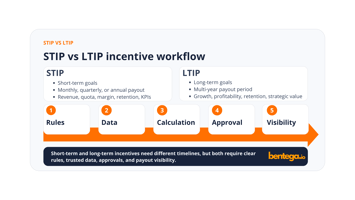
For plan design by timing, compare annual incentive plans with short-term and long-term incentive structures.
Comparison Table: Types of Incentive Pay
Using an Incentive Pay Calculator
A calculator can help you test payout assumptions before launching a plan. Start with the target incentive, performance target, payout rate, and any thresholds or caps.
Compare at least three scenarios: below target, at target, and above target. For a team plan, also check the total employer cost across all eligible participants.
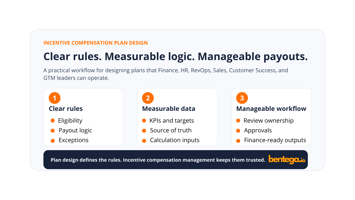
A calculation is only useful when the underlying rules are clear. Document eligibility, measurement periods, crediting, and approval requirements alongside the numbers.
Pay and Incentives: Finding the Right Mix
Balancing pay and incentives is key. Over-reliance on incentives can create pressure, while too little reward fails to drive performance.
There is no single pay mix that suits every role. The right balance depends on how directly employees influence the measured outcome, the length of the performance cycle, and how much income variability is appropriate. A sales role with direct revenue responsibility may need a different mix from a support role or a team participating in a company-wide bonus plan.
Each business needs its own strategy. A strong incentive pay plan reflects your culture, goals, and people. For a deeper look at base pay, variable pay, OTE, and role-specific incentive design, read the variable compensation plan guide.
Conclusion: Which Incentive Pay Plan Is Best?
There’s no one-size-fits-all approach to incentive compensation – our Incentive Compensation guide walks through the main models so you can choose the right mix for your business. The right model depends on:
-
Your business goals
-
Your team structure
-
The metrics that matter most
Whether you're looking at performance pay structures, team incentives, or sales commissions, the most important thing is clarity and consistency.
After you’ve chosen the right mix of incentive pay types, centralize the rules and payouts in incentive compensation management software so your plans stay consistent, auditable, and easy to adjust.
Ready to build a scalable incentive plan that actually works?
Get started with Bentega today - book a demo or chat with our team →
Explore More
- Incentive Compensation
- Incentive Compensation Management guide
- Compensation plan template
- Annual Incentive Plan
- Short-Term vs Long-Term Incentives
- Variable compensation plans
- Bonus guide