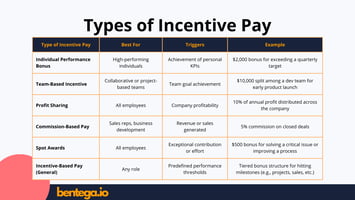
A strong variable compensation plan can be the engine that drives performance, retention, and revenue growth. Whether it’s commissions for your sales team, bonuses for marketing, or profit-sharing for company-wide motivation, well-designed variable pay structures align incentives with business outcomes. Variable compensation is part of the broader incentive compensation system, alongside commissions, bonuses, SPIFs, OTE-based payouts, KPI incentives, and other performance-linked pay.
In this article, we’ll explore how to create effective variable compensation programs, offer variable pay examples, and provide best practices to align with your overall variable pay and incentive compensation strategy.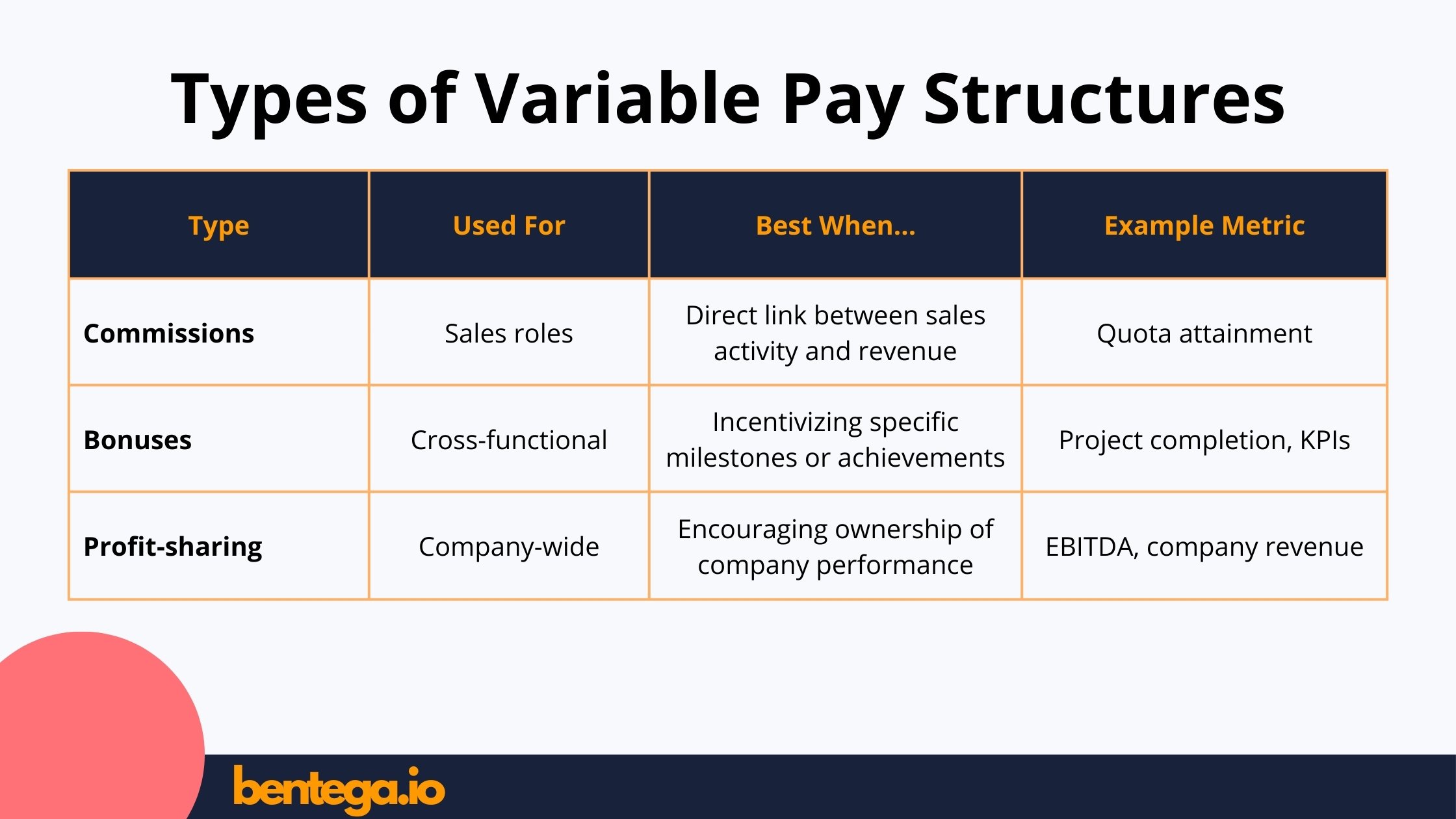
What is variable compensation?
Variable compensation - also known as variable pay - is the portion of an employee’s total earnings that is performance-based. Unlike fixed salary, it fluctuates depending on results and can take the form of:
-
Commissions for closing deals
Dig deeper into sales commissions with our sales commission guide for explanations and best practices.
-
Bonuses for hitting individual or team goals
To go deeper on the bonus slice of your variable pay strategy, use our bonus compensation guide for plan structures and examples.
-
Profit-sharing tied to overall company performance
Most organizations build variable comp as a percentage of on-target earnings (OTE) to align pay with effort and outcomes. For teams leaning on OTE-based commission plans, our On-Target Earnings (OTE) guide provides the baseline structure to build on.
Why Variable Compensation Plans Matter
A well-structured variable compensation plan has a direct impact on:
- Employee motivation
- Goal alignment across departments
- Company performance
- Retention of top talent
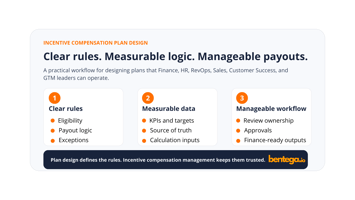
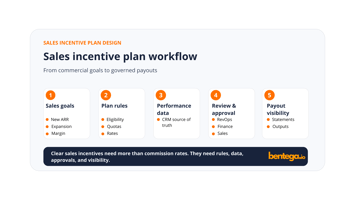
The key is to make sure your variable pay plan supports both short-term execution and long-term business strategy. As variable pay expands across teams, the challenge shifts from plan design to incentive compensation management: maintaining rules, connecting data, calculating payouts, approving exceptions, and giving employees visibility.
What is a balanced compensation structure?
A balanced compensation structure is a comprehensive pay system that integrates various types of compensation elements to ensure that employees receive fair and equitable rewards for their performance, all while supporting and advancing the overarching business goals of the organization. This structure is designed to blend fixed pay, such as regular salaries that provide a stable and predictable income, with variable pay, which includes performance-based incentives like commissions, bonuses, or profit-sharing plans. These variable components are directly tied to specific performance metrics, encouraging employees to achieve and exceed their targets.
The essence of a balanced compensation structure lies in its ability to motivate employees by offering them a clear path to increased earnings through exceptional performance, while simultaneously safeguarding the company’s financial stability.
This is particularly crucial in roles where earnings can fluctuate significantly based on individual or team performance. By carefully calibrating the mix of fixed and variable pay, companies can create a compensation plan that not only drives productivity and engagement but also ensures that the organization remains financially sound and competitive in the market.
This balance is essential to maintaining employee satisfaction and retention, as well as achieving long-term business success.
Types of Variable Pay Structures
Here’s how different variable pay programs are commonly used across functions:
| Type | Used For | Best When… | Example Metric |
|---|---|---|---|
| Commissions | Sales roles | Direct link between sales activity and revenue | Quota attainment |
| Bonuses | Cross-functional | Incentivizing specific milestones or achievements | Project completion, KPIs |
| Profit-sharing | Company-wide | Encouraging ownership of company performance | EBITDA, company revenue |
Best Practices for Designing Variable OTE Plans
1. Set Clear Business Goals
Begin by clearly identifying and articulating the specific business outcomes you aim to achieve. These could include objectives such as increasing revenue growth, enhancing customer acquisition, or improving operational efficiency. It is crucial to have a detailed understanding of these goals, as they will serve as the foundation for your On-Target Earnings (OTE) plan. Once these objectives are established, ensure that your OTE plan is meticulously designed to directly support and align with these goals.
This alignment is essential for creating a compensation structure that not only motivates employees but also drives the company towards its strategic targets. By doing so, you can create a cohesive plan that integrates seamlessly with your broader business strategy, ensuring that every aspect of your compensation plan contributes to the overall success and sustainability of the organization.
Example:
A SaaS company focused on growth might emphasize commissions based on new client acquisitions, while a mature business might reward customer retention and recurring revenue.
2. Establish Role-Specific Pay Mixes
Customize pay structures by carefully considering the unique responsibilities and impact of each specific role within the organization, ensuring that compensation is directly aligned with the role's contribution to the overall success and strategic objectives of the business. This tailored approach should not only reflect the prevailing industry standards to remain competitive but also be linked to the company's internal goals and values. By doing so, organizations can create a compensation framework that acknowledges the distinct value each role brings, motivating employees to excel in their positions while supporting the broader mission and vision of the company.
Example:
- Sales Reps: 50% base salary + 50% variable pay (high-performance incentives).
- Customer Success Managers: 70% base salary + 30% bonus (based on client satisfaction or retention).
- Technical Staff: 90% base salary + 10% project completion bonuses.
- Marketing: 85/15 (campaign or pipeline-based bonuses)
3. Balance Risk and Reward
Striking the right balance in a compensation plan is key for employee satisfaction and organizational success. Over-reliance on variable pay can cause financial instability for employees, while too much fixed pay can reduce motivation. A balanced mix of stability and performance incentives ensures employees have a steady income and are motivated to exceed goals, fostering a productive and engaged workforce.
Tip: Use industry benchmarking platforms like LinkedIn Salary Insights and Radford Surveys to determine competitive pay mixes.
4. Ensure Financial Sustainability
Your On-Target Earnings (OTE) structure should fit within financial limits while remaining competitive to attract talent. This requires balancing affordability with appeal. Conduct financial modeling and scenario planning to forecast impacts on financial health and identify sustainable pay structures. This ensures your OTE plan is viable and aligned with strategic goals, supporting business success and employee satisfaction.
Example:
An organization with tight cash flow might opt for a lower base salary with higher commissions, shifting the financial risk to employees but offering unlimited earning potential.
5. Use Measurable and Controllable Metrics
Utilize clear, quantifiable metrics that are directly aligned with the overarching goals of the company. These metrics should be well-defined and precise, ensuring that they are not only achievable but also realistic for employees to strive towards.
It is essential that these metrics are intricately connected to both immediate, short-term objectives and broader, long-term success strategies. By doing so, they provide a comprehensive framework that guides employees in understanding how their individual contributions impact the overall progress and achievements of the organization.
Employees should be able to directly influence their variable earnings. Avoid vague or overly broad metrics. Great variable comp is:
-
Specific
-
Timely
-
Controllable
📌 Example: Instead of tying an SDR’s bonus to total company sales, tie it to meetings booked or opportunities created.
For stronger metric selection, use the KPIs and metrics guide to choose measures that are measurable, explainable, and connected to the behavior the plan should reward.

6. Offer Simplicity and Transparency
A common failure point in variable pay structure is over-complication. Use a simple formula or dashboard to track payout progress, and ensure employees clearly understand how they earn variable pay.
7. Build Flexibility Into the Plan
The market changes. Your variable compensation program should be revisited quarterly or annually to reflect evolving goals and conditions. Build feedback loops and allow for periodic recalibration.
For broader plan-design context, compare this with annual incentive plans and short-term versus long-term incentive structures.
Variable Pay Examples
Here are a few examples of variable pay structures by function:
| Role | Base Salary | Variable Pay | Total OTE | Variable Type |
|---|---|---|---|---|
| Sales Executive | €60,000 | €60,000 | €120,000 | Commissions (50%) |
| SDR | €50,000 | €25,000 | €75,000 | Commissions (33%) |
| Customer Success | €70,000 | €20,000 | €90,000 | Bonuses (retention) |
| Marketing Manager | €85,000 | €10,000 | €95,000 | Bonuses (pipeline goal) |
| Product Manager | €90,000 | €15,000 | €105,000 | Profit-sharing + bonus |
Common Pitfalls to Avoid
Misaligned metrics: Tying pay to goals the employee doesn’t influence
Overly complex payout rules: Employees should understand earnings potential at a glance
No review mechanism: Variable plans must evolve with company strategy
Final Thoughts
An effective variable compensation plan doesn’t just pay people - it motivates performance. When designed well, your variable pay program becomes a lever for growth, accountability, and retention. The best part? It scales with success.
Looking to implement smarter variable plans or align your comp strategy with scalable growth? When your variable pay design is in place, the next step is to operationalize it. Use an incentive compensation management (ICM) platform to turn your rules into automated calculations, approvals, and payouts at scale.
Explore more
- Incentive compensation guide
- Incentive compensation management guide
- Compensation plan template
- Annual incentive plan
- Types of incentive pay
- KPIs and metrics
- Product overview