If you’ve worked in sales long enough, you’ve probably seen both SPIF and SPIFF used interchangeably. So what is a SPIF, and is SPIF or SPIFF the correct term?
In this article, we’ll clear up the confusion around SPIF vs. SPIFF, explain the real SPIF meaning, and break down how SPIF incentives are used in modern sales teams. We'll also explore the origin of the term and provide sales SPIFF examples you can learn from.
What Is a SPIF?
SPIF stands for Sales Performance Incentive Fund. It’s a short-term, tactical incentive - usually a bonus or reward - given to sales reps for achieving specific objectives over a limited time frame.
Companies use SPIFs to:
-
Drive attention to specific products or SKUs
-
Boost performance during slow quarters
-
Encourage reps to adopt new processes or tools
-
Support marketing campaigns with short-term sales pushes
So when someone asks, “what is a SPIF?”, it’s essentially a tool used to boost motivation and accelerate specific business outcomes.
What Is a SPIFF?
SPIFF is simply a variant spelling of SPIF, but the meaning is the same.
The spelling “SPIFF” has gained popularity in some industries (especially in retail and tech), but SPIF remains the more correct, formal acronym since it represents Sales Performance Incentive Fund.
So, when asking “what is a SPIFF in sales?” - you’re asking the same thing as “what is a SPIF?” It’s just spelled differently. Both refer to the same type of sales incentive program.
For a more practical breakdown of how short-term incentive campaigns work, read our full guide to SPIFs and sales incentive campaigns.
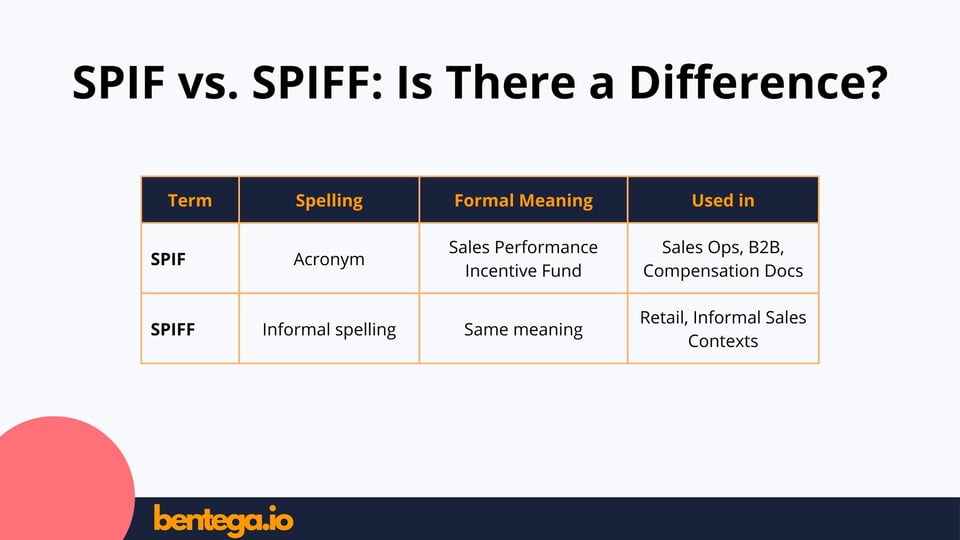
SPIF vs. SPIFF: Is There a Difference?
Short answer: No.
Long answer: The difference is only in the spelling and formality.
| Term | Spelling | Formal Meaning | Used in |
|---|---|---|---|
| SPIF | Acronym | Sales Performance Incentive Fund | Sales Ops, B2B, Compensation Docs |
| SPIFF | Informal spelling | Same meaning | Retail, Informal Sales Contexts |
If you’re writing formal documentation, compensation plans, or reports, use SPIF. If you're talking casually or using colloquial language in a team Slack channel, SPIFF might appear more often.
But remember: the spiff meaning and the spif meaning are the same.
Once the naming is clear, the next step is designing the campaign rules. Use the SPIF guide to define the goal, eligibility, payout logic, tracking source, approval process, and communication plan.
When are SPIFs used?
A SPIF is a fund or budget set aside to reward specific sales behaviors - usually over a short, defined period.
These incentives are layered on top of existing commissions and bonuses and are typically used for:
For practical campaign ideas, review these top sales SPIF examples before choosing the incentive format. If you are ready to build the campaign itself, use the SPIF guide for the full framework covering goals, eligibility, payout logic, tracking, approvals, and communication.
SPIF Incentive vs. Commission: How They Work Together
A SPIF incentive is not the same as a commission. Commissions are ongoing, typically percentage-based, and tied to quota attainment.
SPIFs (or SPIFFs) are temporary, tactical, and often fixed in reward value. Think of them as bonuses for short-term hustle.
Example of a SPIF incentive:
“Sell 5 units of Product X this week and get a $100 bonus per unit.”
This is different from a sales commission, which might be:
“Earn 5% on every unit sold, regardless of the product.”
Both SPIF incentives and commission structures sit inside your broader sales compensation plan – the full mix of base salary, variable pay, bonuses, and SPIFs that you use to reward performance. If you are deciding between money, prizes, recognition, or mixed rewards, compare cash and non-cash SPIF incentives before finalizing the campaign.
Sales SPIFF Examples
Here are a few real-world sales SPIFF examples:
-
Launch Push SPIF
→ $150 bonus per deal for selling the newly released product in the first 30 days -
End-of-Quarter Sprint
→ Sell over $10K in the last two weeks of Q3 and receive a $500 bonus -
Behavioral SPIF
→ $50 reward for every demo scheduled through a new CRM tool -
Leaderboard SPIFF
→ Top 3 reps with the most upsells in a month win gift cards or experiences
Each SPIF incentive is built to drive short-term actions aligned with broader revenue goals.
Why Spelling Matters (Kind Of)
From a sales ops and compensation management perspective, SPIF is the correct, professional term.
Final Take: Use SPIF for Accuracy, Acknowledge SPIFF for Visibility
If you’re building incentive plans, compensation documents, or software configurations, use SPIF. If you’re educating your sales team, acknowledging SPIFF is fine - just be clear that the two mean the same thing. And if you're still wondering whether to call it a SPIF or SPIFF - don’t stress. The most important thing is designing a program that motivates behavior and supports performance goals.
If you’re updating your broader sales compensation strategy, SPIFs are just one of several levers alongside commission, bonuses, and OTE.
Before launching the campaign, review the common SPIF mistakes that lead to unclear eligibility, weak tracking, payout disputes, and low trust. Also, define how you will measure SPIF success so the campaign can be reviewed against participation, payout cost, revenue impact, and behavior change.
Related Reading
Planning a SPIF campaign?
Start with the SPIF guide and checklist before moving into software or automation.