When it comes to designing a SPIF sales incentive, one question always comes up:
Cash vs. Non-Cash SPIF Incentives: Which sales strategy is best? Should we offer cash, or get creative with non-cash rewards like gift cards, tech, or experiences?
There’s no one-size-fits-all answer, but understanding how SPIF incentives work - and what drives behavior - can help you make the right call.
In this article, we’ll break down:
-
The definition of a SPIF
-
Differences between cash and non-cash SPIF
-
Pros and cons of cash vs. non-cash SPIF
-
When to use one over the other
Let’s dig in.
For the full SPIF campaign framework, including examples, payout logic, governance, and checklist planning, start with the SPIF guide.
What Is a SPIF Incentive in Sales?
First, a quick refresher on the definition of a SPIF:
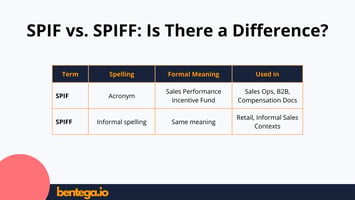
SPIF (Sales Performance Incentive Fund) is a short-term reward used to motivate sales behavior, typically outside the normal sales compensation plan.
A SPIF sales incentive can be as simple as $100 per upsell or as elaborate as a leaderboard contest with high-end prizes.
Key characteristics:
-
Short-term (often 1–4 weeks)
-
Goal-specific (e.g. push a product, drive demos, close fast)
-
Usually layered on top of base pay and commission
The Two Main Types of SPIF Incentives
When building a SPIF program, you’ll typically choose between:
Cash SPIF Incentives
Cash SPIF incentives are direct monetary rewards, either flat amounts, tiered payouts, or % bonuses.
Examples:
-
$200 bonus for every deal over $10K
-
$500 for top performer of the week
-
Tiered payout for number of qualified demos booked
These are typically processed via your payroll system, and is naturally a part of the payout statement.
Non-Cash SPIF Incentives
Non-cash SPIF incentives are rewards like:
-
Gift cards
-
Merchandise (headphones, Apple Watch, etc.)
-
Team dinners or lunches
-
Extra Paid Time Off (PTO) days
-
Experiential prizes (trips, events, etc.)
While not liquid cash, they can still carry high perceived value - especially when tied to recognition and status. Before choosing reward types, make sure your SPIF program basics (objectives, rules, and KPIs) are defined in a clear guide.
Cash SPIFs: Pros and Cons
Pros
-
Immediate impact: Reps know exactly what they’re getting
-
Universal appeal: Everyone values money, and recipients can decide for themselves what to do with them
-
Simple to administer through payroll or payout tools
-
Easier to scale for multi-region or global teams
Cons
-
May blend in with commissions or base pay
-
Less memorable long term
-
Can lose motivational value if overused
Non-Cash SPIFs: Pros and Cons
Pros
-
Memorable and shareable (e.g. “I won an iPad!”)
-
Creates status and recognition
-
Feels like a “treat” vs. income
-
Less likely to be mentally compared to salary
Cons
-
May not appeal to everyone
-
Harder to administer (shipping, inventory, etc.)
-
Value is subjective (what if they don’t want it?)
-
May feel less motivating for highly money-driven reps
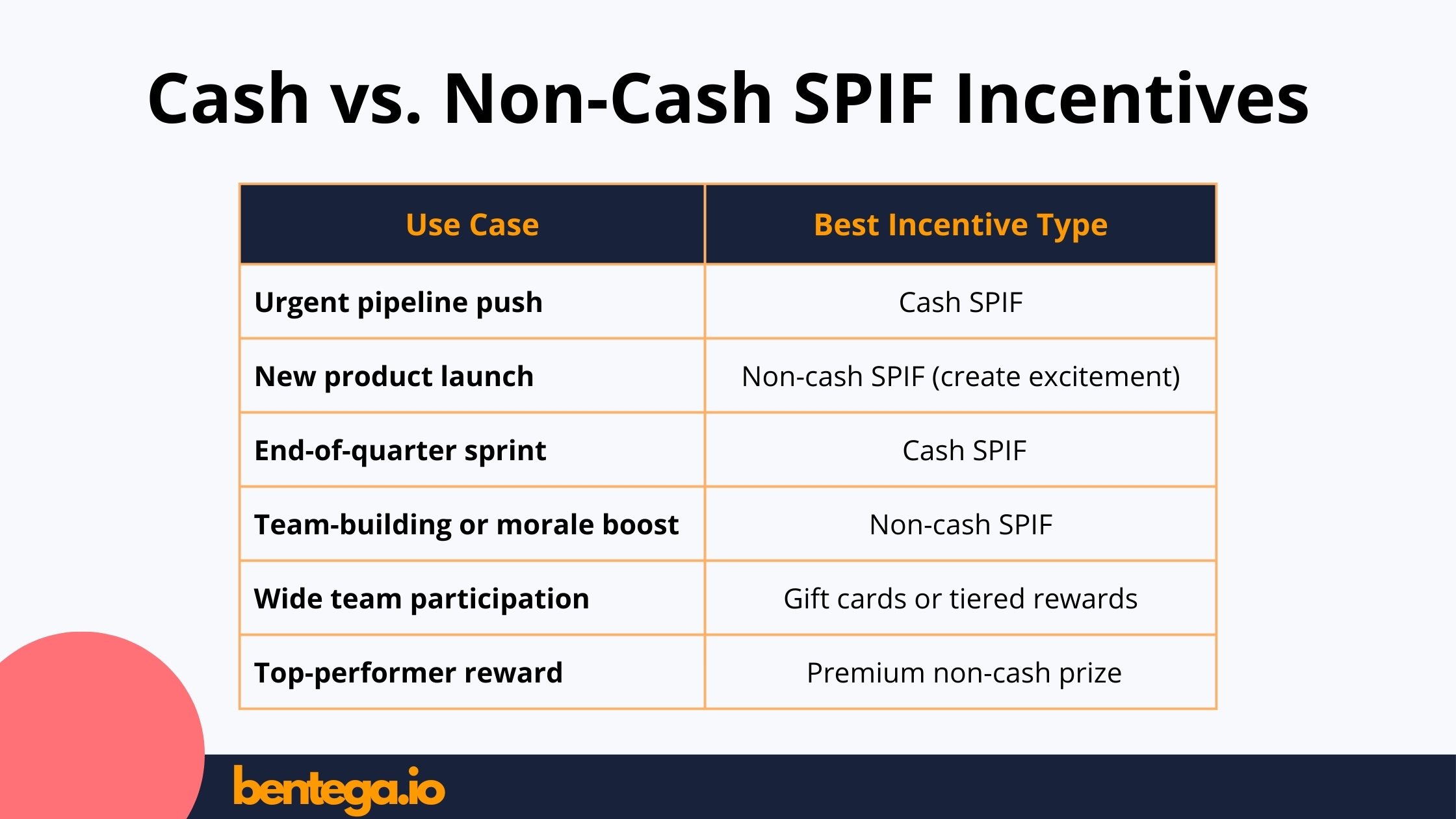
When to Use Cash vs. Non-Cash SPIF Incentives
| Use Case | Best Incentive Type |
|---|---|
| Urgent pipeline push | Cash SPIF |
| New product launch | Non-cash SPIF (create excitement) |
| End-of-quarter sprint | Cash SPIF |
| Team-building or morale boost | Non-cash SPIF |
| Wide team participation | Gift cards or tiered rewards |
| Top-performer reward | Premium non-cash prize |
Pro tip: You can always mix and match. Use a small cash bonus for baseline activity, and offer a high-end non-cash reward for the top 3 performers.
What About SPIF Payments and Payroll?
A note on logistics:
-
Cash SPIFs often require routing through payroll systems, especially if they’re added to regular paychecks.
-
Some companies use prepaid cards to issue SPIF payments quickly and independently of payroll cycles.
-
Non-cash SPIFs (like gifts or prizes) may also have tax implications depending on your region - so consult Finance or Legal before rolling out large campaigns.
Best Practices for Running SPIF Sales Incentives
-
Set a clear, measurable goal (e.g. 15 demos booked)
-
Limit the time frame (1–4 weeks is ideal)
-
Keep rules simple (if they need a spreadsheet to understand it, it’s too complex)
-
Promote it actively (email, Slack, dashboards)
-
Celebrate publicly (recognition boosts morale)
Sales SPIF Examples
| Goal | SPIF Type | Reward |
|---|---|---|
| Book 10 demos | Cash | $100 bonus |
| Top 3 up-sellers | Non-cash | Bose headphones |
| Fastest to close deal | Cash | $300 bonus |
| Most CRM entries in a week | Non-cash | Extra PTO day |
| Team-wide new opp creation | Mixed | Gift cards for all, $500 for #1 |
For more campaign formats, review top SPIF examples and the guide to measuring SPIF success.
Final Verdict: Which SPIF Incentive Works Best?
Cash SPIFs are best when:
-
You need fast action
-
You’re targeting high-volume activities
-
Your team is highly money-driven
Non-Cash SPIFs are best when:
-
You want to boost morale or culture
-
You’re recognizing standout performance
-
You want to create lasting impressions
And remember: a smart SPIF program isn’t about the reward, but the behaviour it drives.