Companies use different types of bonuses for different reasons, from attracting a new hire to rewarding performance, retaining key employees, recognizing exceptional work, or sharing company success.
This guide compares the most common bonus types, with practical bonus examples showing when each is used and the main consideration to think about when choosing between them.
For formulas, eligibility rules, approvals, governance, and bonus-plan administration, use our complete bonus plan guide.
Last updated: 2 September 2026.
What is bonus pay?
Bonus pay is compensation employees may receive in addition to fixed salary. Bonuses can recognize performance, support hiring or retention, reward team or company results, or acknowledge a specific contribution.
The important distinction is purpose. A signing bonus solves a different problem from a performance bonus, retention bonus, referral bonus, or profit-sharing bonus.
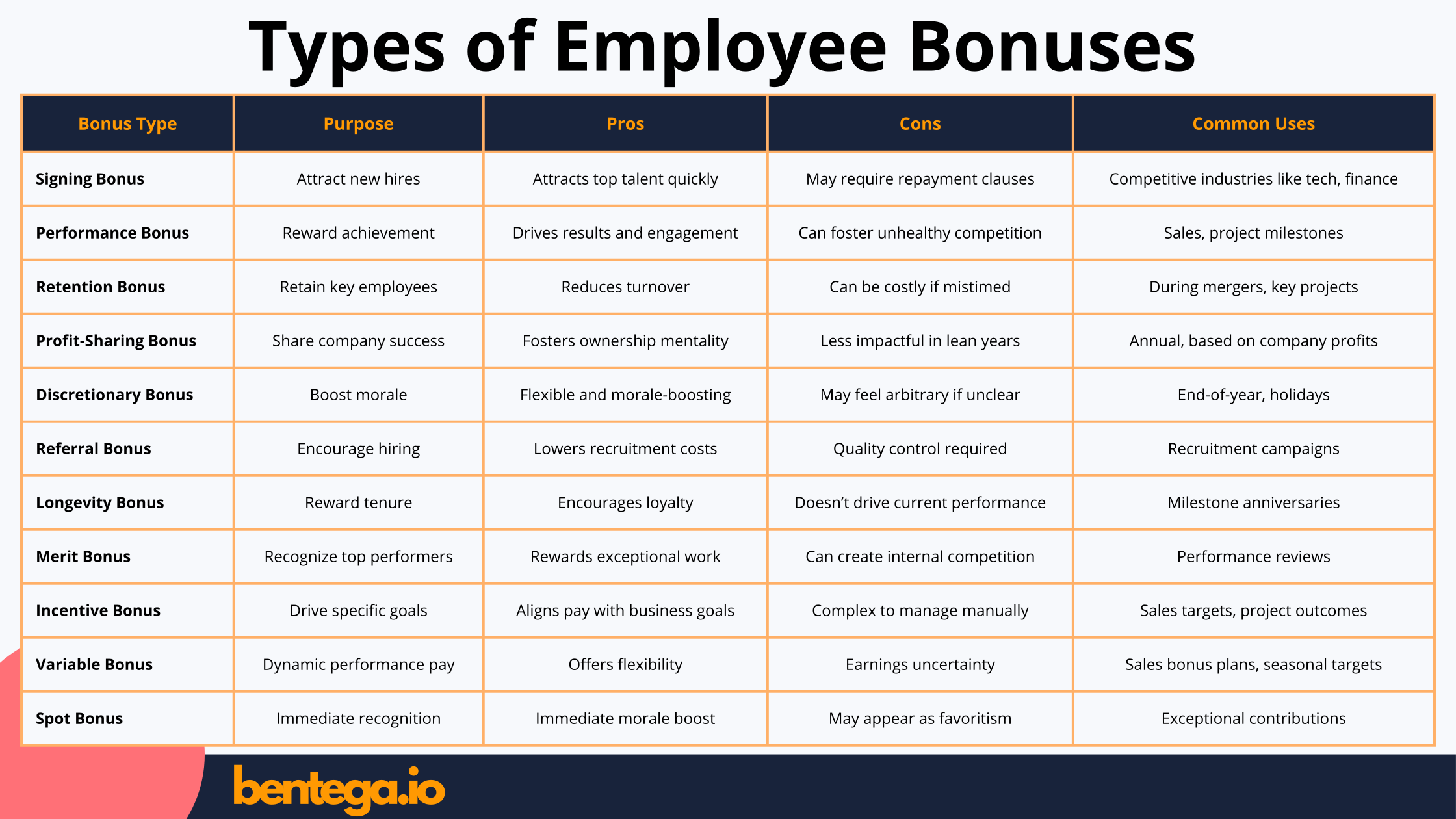
The following comparison covers common types of bonuses for employees and how they differ in practice.
Employee bonus types compared
Common types of employee bonuses
Signing bonus
What it is: A signing bonus is a one-time payment offered to a new employee as part of joining the company.
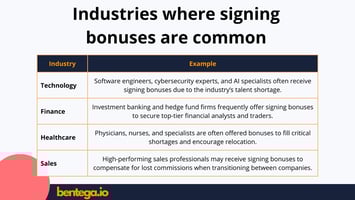
When it is used: Companies may use signing bonuses when recruiting for difficult-to-fill roles, competing for a candidate, or addressing a gap between an offer and the candidate's expectations.
Simple example: A new employee receives a €3,000 signing bonus after starting the role.
Main design consideration: Define when the payment is made and any conditions attached to it clearly before the employee accepts the offer.
For deeper coverage, see our signing bonus guide.
Performance bonus
What it is: A performance bonus rewards an employee, team, or group for achieving defined performance outcomes.
When it is used: It works well when results can be assessed against clear goals such as revenue, customer outcomes, project delivery, quality, or operational KPIs.
Simple example: A Customer Success Manager receives a quarterly bonus after achieving agreed retention and customer-health targets.
Main design consideration: Employees should understand which results determine the bonus and how their performance is assessed.
For detailed performance-bonus structures and examples, read our performance bonus guide.
Team bonus
What it is: A team bonus rewards a group for achieving a shared outcome.
When it is used: Team bonuses are useful when collaboration matters and the result cannot reasonably be attributed to one employee.
Simple example: A Customer Success team receives a shared bonus after reaching its quarterly retention objective.
Main design consideration: Define who belongs to the eligible team and how the shared result affects individual payouts.
Retention bonus
What it is: A retention bonus is a payment designed to encourage an employee to remain with the organization through a defined period, transition, or milestone.
When it is used: It may be appropriate during a major project, organizational change, leadership transition, or another period when retaining specific employees is especially important.
Simple example: A key employee receives €5,000 after remaining through the completion of an important transformation project.
Main design consideration: Make the required retention period, eligibility conditions, and expected payment timing clear.
Profit-sharing bonus
What it is: A profit-sharing bonus distributes part of an agreed company profit pool to eligible employees.
When it is used: It can help connect employee rewards to overall company financial performance rather than individual results alone.
Simple example: After the company reaches its agreed annual profitability outcome, eligible employees receive a payment from a defined bonus pool.
Main design consideration: Employees should understand what determines the pool and how it is allocated.
Discretionary bonus
What it is: A discretionary bonus is awarded without a predefined formula determining the exact payout.
When it is used: It can be used to recognize contributions, exceptional circumstances, or broader performance where management wants to retain judgment over the final award.
Simple example: An employee receives a €1,000 year-end bonus in recognition of an exceptional contribution during the year.
Main design consideration: Discretion can create uncertainty if employees do not understand how or why decisions are made. Use clear decision principles and communication.
Referral bonus
What it is: A referral bonus rewards an employee for referring a candidate who is successfully hired under the company's referral program.
When it is used: Referral bonuses are commonly used to encourage employees to introduce relevant candidates to open roles.
Simple example: An employee receives €1,500 after a referred candidate joins and meets the conditions defined in the referral program.
Main design consideration: State which roles qualify, when the bonus is earned, and which employee is credited for the referral.
Longevity or service bonus
What it is: A longevity or service bonus recognizes an employee for reaching a defined tenure milestone.
When it is used: Companies may use it to recognize long service or important employment anniversaries.
Simple example: An employee receives a one-time bonus after completing five years with the company.
Main design consideration: Decide whether tenure by itself should trigger the reward or whether additional criteria should apply.
Merit bonus
What it is: A merit bonus recognizes an employee based on assessed past performance or contribution. Unlike a performance bonus based on predefined measures and targets, a merit bonus normally recognizes performance or contribution that has already been assessed. The distinction matters because the employee’s ability to anticipate the award is different.
When it is used: It is often considered after a performance-review cycle when an employee has delivered particularly strong results or contribution.
Simple example: An employee receives a €2,000 merit bonus after receiving an exceptional annual performance assessment.
Main design consideration: Consistent assessment criteria matter because the decision may depend partly on managerial evaluation rather than a predefined payout formula.
A merit bonus is different from an incentive tied to predefined future goals. See our merit bonus versus incentive bonus guide for the distinction.
Annual incentive bonus
What it is: An annual incentive bonus is the payout associated with a structured annual performance cycle.
When it is used: It is useful when employees are rewarded against company, team, individual, or combined goals measured over a year.
Simple example: An employee has an annual target bonus linked to company results and individual performance objectives.
Main design consideration: The annual plan should clearly distinguish the performance period, measures, targets, and resulting payout.
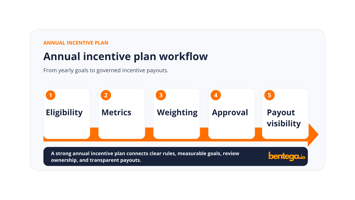
For the complete structure behind this type of yearly incentive, read our annual incentive plan guide.
Spot bonus
What it is: A spot bonus is a relatively immediate, one-time reward for a specific contribution or achievement.
When it is used: It works well when managers want to recognize valuable work close to the event rather than waiting for a formal annual or quarterly cycle.
Simple example: An employee receives a €250 spot bonus after resolving an urgent customer problem with significant cross-functional impact.
Main design consideration: Define consistent principles for when spot bonuses are appropriate so recognition does not appear arbitrary.
Executive bonus
What it is: An executive bonus rewards senior leaders for company, financial, strategic, or organizational outcomes.
When it is used: Executive bonus arrangements are typically used when leadership compensation should reflect broader business responsibility.
Simple example: A leadership team has an annual bonus opportunity tied to company performance and agreed strategic objectives.
Main design consideration: Leadership metrics, weighting, review, and approval should reflect the scope of the executive's responsibilities.
For deeper leadership-specific guidance, see our executive bonus plan guide.
Employee bonus examples by role
The same company may use several bonus types because different roles and situations call for different rewards.
Here are practical bonus pay examples:
These examples illustrate different purposes rather than prescribe a particular structure. The appropriate choice depends on what the company wants the payment to recognize or encourage.
How to compare bonus types
Start with the reason for the payment:
- Hiring: consider a signing or referral bonus.
- Individual achievement: consider a performance, merit, or spot bonus.
- Shared results: consider a team, profit-sharing, or annual incentive bonus.
- Retention or service: consider a retention or longevity bonus.
- Leadership outcomes: consider an executive bonus arrangement.
Then compare the timing, employee population, measurement basis, and level of discretion involved.
Once you have selected the appropriate type, use the complete bonus plan guide for detailed rules, formulas, eligibility, approvals, governance, payout timing, and administration.
Choosing the right type of employee bonus
There is no single bonus type that fits every objective.
The right starting point is the purpose of the payment: hiring, retention, recognition, individual performance, shared results or broader company performance. Once that purpose is clear, the company can define the eligibility, measures, timing, approvals and administration needed to make the bonus understandable and workable.
For guidance on those design and operating decisions, continue with Bentega’s complete bonus plan guide.
Ready to document your chosen approach? Use Bentega’s editable bonus plan template to capture eligibility, measures, calculation rules and approval responsibilities.
Related reading
- How signing bonuses work
- Performance bonuses: How companies motivate employees
- Merit bonuses vs. incentive bonuses
- Executive bonus plans
- Annual incentive plans
- Complete bonus plan guide
Need to turn several bonus types into one controlled operating process? Book a demo to see how Bentega supports bonus-plan calculations, reviews and payout visibility.